
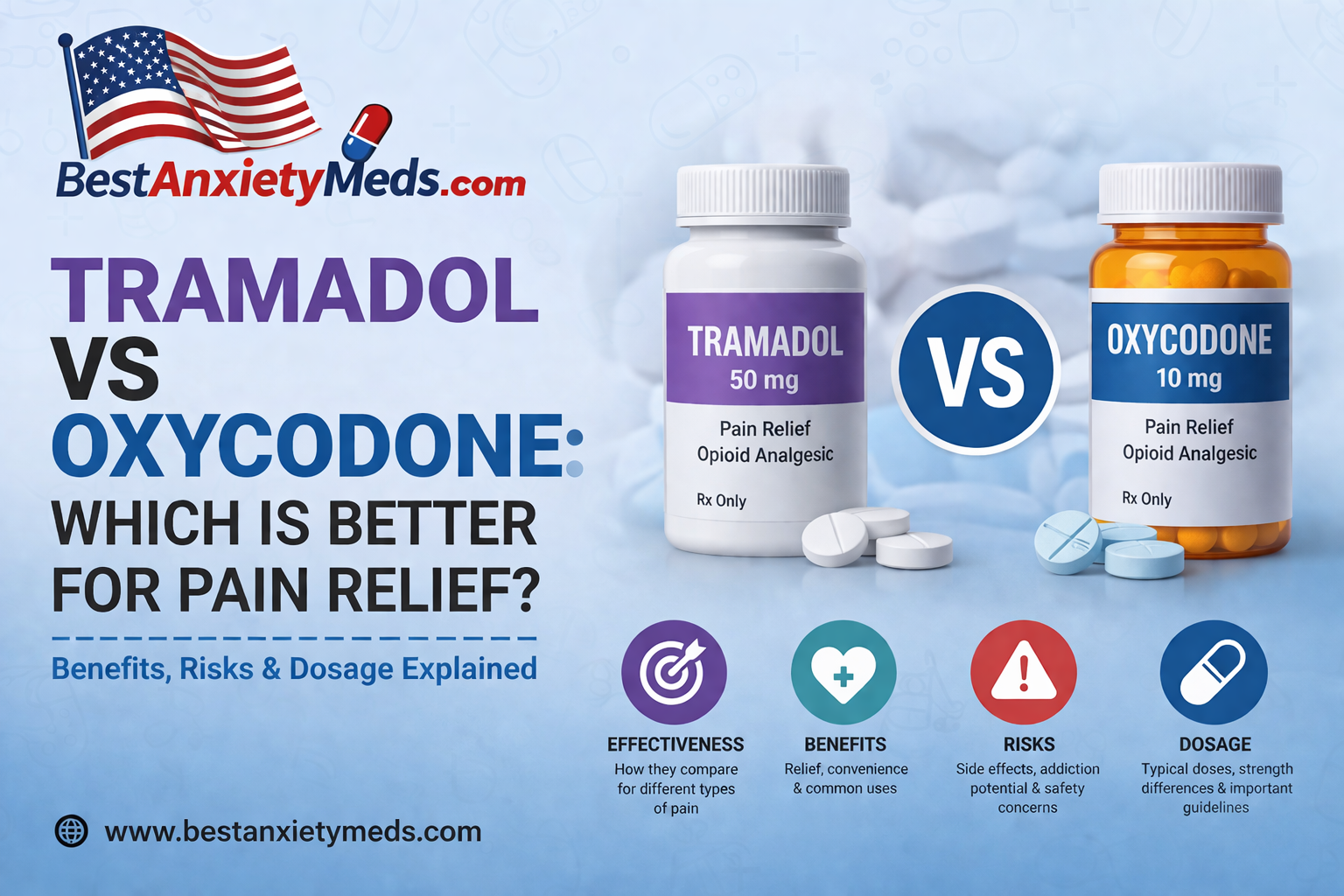
Pain management is an important part of healthcare, especially for people dealing with injuries, surgeries, or chronic conditions. When over-the-counter medications are not enough, doctors may prescribe stronger painkillers like Tramadol or oxycodone.
Both of these medications belong to the opioid class, meaning they work by affecting how the brain perceives pain. While they share similarities, there are clear differences in potency, mechanism, safety, and effectiveness that make each drug suitable for different situations.
In this in-depth guide, we will explore how tramadol and oxycodone differ, including their uses, strength, side effects, and risks—so you can better understand these medications.
What Are Tramadol and Oxycodone?
Tramadol and oxycodone are prescription opioid analgesics used to relieve moderate to severe pain. These medications are typically recommended when non-opioid drugs like standard pain relievers fail to provide adequate relief.
Even though both drugs are opioids, tramadol is often considered a weaker or atypical opioid, while oxycodone is a stronger, more traditional opioid. This difference plays a major role in how they are prescribed and how they affect the body.
Main Differences Between Tramadol and Oxycodone
1. Potency (Strength)
One of the most significant differences between tramadol and oxycodone is their strength or potency. Oxycodone is much more powerful and is commonly used in cases where strong pain relief is required, such as after major surgery or in cancer-related pain.
Tramadol, on the other hand, is considered a milder opioid. It is usually prescribed for moderate pain or situations where a strong opioid may not be necessary. Although it is weaker, tramadol can still be effective when used appropriately.
Because of its higher potency, oxycodone carries a greater risk of misuse, addiction, and overdose, while tramadol is often seen as a slightly safer alternative, though it still has risks.
2. Mechanism of Action
Both medications relieve pain by interacting with opioid receptors in the brain and spinal cord, which helps block pain signals. However, tramadol has an additional mechanism that makes it unique.
Oxycodone works mainly by directly activating opioid receptors, leading to strong pain relief. Tramadol not only binds to these receptors but also increases serotonin and norepinephrine levels in the brain.
These neurotransmitters are involved in mood and pain regulation, which means tramadol provides pain relief through both opioid and non-opioid pathways. This dual action can make it useful in certain types of pain conditions.
3. Uses and Medical Applications
Both tramadol and oxycodone are used to treat moderate to severe pain, especially when other treatments are ineffective. Common conditions include post-surgical pain, injury-related pain, and chronic illnesses.
Oxycodone is typically reserved for more severe or intense pain, where rapid and strong relief is necessary. Tramadol is often used for moderate pain or as a step-up option when milder medications fail.
Doctors decide which medication to prescribe based on factors such as pain severity, patient history, and risk of dependency.
4. Dosage and Forms
Tramadol is available in multiple forms, including tablets, extended-release tablets, capsules, and liquid solutions. The usual dose ranges from 50 mg to 100 mg every 4–6 hours, with a maximum daily limit.
Oxycodone also comes in various forms, such as immediate-release and extended-release tablets, capsules, and liquid. Typical doses range from 5 mg to 15 mg every 4–6 hours, depending on the patient’s needs.
In both cases, doctors aim to prescribe the lowest effective dose for the shortest possible duration to minimize risks.
5. Onset of Action and Duration
Both tramadol and oxycodone usually start working within 30 to 60 minutes after taking a dose. This makes them effective for managing acute pain episodes.
The duration of action depends on the formulation. Immediate-release versions last about 4–6 hours, while extended-release versions can provide relief for up to 12–24 hours.
Although their timing is similar, oxycodone often produces a stronger and more noticeable pain-relieving effect due to its higher potency.
6. Side Effects
Like all opioid medications, tramadol and oxycodone can cause a range of side effects. Common effects include drowsiness, dizziness, constipation, dry mouth, and headache. These occur because opioids slow down certain body functions.
Tramadol may also cause nervousness, sweating, or nausea, while oxycodone may lead to more intense sedation and fatigue.
The severity of side effects often depends on the dose and the individual’s response to the medication.
7. Serious Risks and Warnings
Both medications carry serious risks, particularly when used improperly. One of the most dangerous risks is respiratory depression, where breathing becomes slow or shallow.
They also have a high potential for addiction and dependence, especially with long-term use. Sudden discontinuation can lead to withdrawal symptoms, including anxiety, insomnia, and irritability.
Combining these drugs with alcohol or other sedatives significantly increases the risk of overdose and life-threatening complications.
8. Addiction and Dependence
Oxycodone has a higher potential for addiction due to its strong opioid effects. People taking it for extended periods may develop both physical and psychological dependence.
Tramadol also carries a risk of addiction, although it is generally considered lower. However, misuse or prolonged use can still lead to dependence.
Because of these risks, both medications are classified as controlled substances, and their use is carefully monitored.
9. Effectiveness for Pain Relief
Oxycodone is typically more effective for severe and intense pain, providing fast and powerful relief. It is often used in situations where immediate pain control is necessary.
Tramadol is effective for moderate to moderately severe pain, especially in patients who may not tolerate stronger opioids. Its additional effect on brain chemicals may also help in certain pain conditions.
The effectiveness of either drug depends on the individual, as people respond differently to medications.
Which Is Better for Pain?
There is no single answer to which medication is better. It depends on the patient’s condition and needs.
- Oxycodone is better suited for severe pain requiring strong relief
- Tramadol is often preferred for moderate pain with lower risk concerns
A healthcare provider will consider multiple factors before recommending one over the other.
Use in Chronic Pain Management
Both medications may be used in chronic pain conditions, such as long-term illness or cancer-related pain. However, long-term use increases the risk of dependence and side effects.
Doctors often combine opioids with non-opioid medications and therapies to improve outcomes and reduce reliance on a single drug.
Careful monitoring and regular follow-ups are essential for safe long-term use.
Non-Drug Alternatives for Pain Relief
Pain management does not rely solely on medication. Non-drug approaches can play a significant role in recovery and long-term relief.
These include physical therapy, exercise, stretching, massage, and relaxation techniques. Lifestyle changes, such as maintaining a healthy diet and staying active, can also help reduce pain levels.
Using a combination of treatments often provides better results than relying only on opioids.
Frequently Asked Questions
1. Is tramadol weaker than oxycodone?
Yes, tramadol is less potent than oxycodone, but it can still be effective for moderate pain.
2. Which drug is safer?
Tramadol may have a lower risk profile, but both medications require careful use.
3. Can both medications cause addiction?
Yes, both tramadol and oxycodone can lead to dependence if misused.
4. Which works faster?
Both work within an hour, but oxycodone provides stronger relief.
5. Can they be used together?
Only under medical supervision, as combining opioids increases risks.
Conclusion
Tramadol and oxycodone are both effective pain medications, but they differ significantly in strength, mechanism, and risk levels.
Oxycodone provides powerful pain relief for severe conditions but comes with higher risks. Tramadol offers a milder alternative with a unique dual mechanism that can be useful for moderate pain.
Choosing the right medication should always be based on medical advice, individual health needs, and careful risk assessment.
Disclaimer
This content is for informational and educational purposes only and should not be considered medical advice. Always consult a qualified healthcare professional before starting or stopping any medication. Misuse of opioid medications can lead to serious health risks, including addiction, overdose, or death.