Sleep is essential for both physical and mental health, yet millions of people struggle with insomnia and other sleep disorders. When lifestyle changes and natural remedies fail, many turn to sleeping pills for relief. These medications can help you fall asleep faster, stay asleep longer, and improve overall sleep quality.
However, sleeping pills are not a one-size-fits-all solution. They come in different types, work in different ways, and carry various risks and side effects. Understanding how they function is crucial before using them regularly.
In this comprehensive guide, you’ll learn how sleeping pills work, their types, benefits, risks, and safer alternatives—so you can make informed decisions about your sleep health.
What Are Sleeping Pills?
Sleeping pills, also known as sleep aids, sedatives, or hypnotics, are medications designed to help people fall asleep or stay asleep. They are commonly used for conditions like insomnia, jet lag, and short-term sleep disturbances.
These medications work by affecting the brain’s neurotransmitters, which control sleep and wake cycles. Some sleeping pills promote relaxation, while others directly slow down brain activity to induce sleep.
While sleeping pills can be effective in the short term, they are generally not recommended as a long-term solution. Many experts suggest addressing the root cause of sleep problems instead of relying solely on medication.
How Do Sleeping Pills Work?
Sleeping pills work by targeting different systems in the brain that regulate sleep and alertness. The exact mechanism depends on the type of medication.
1. GABA Activation (Most Common Mechanism)
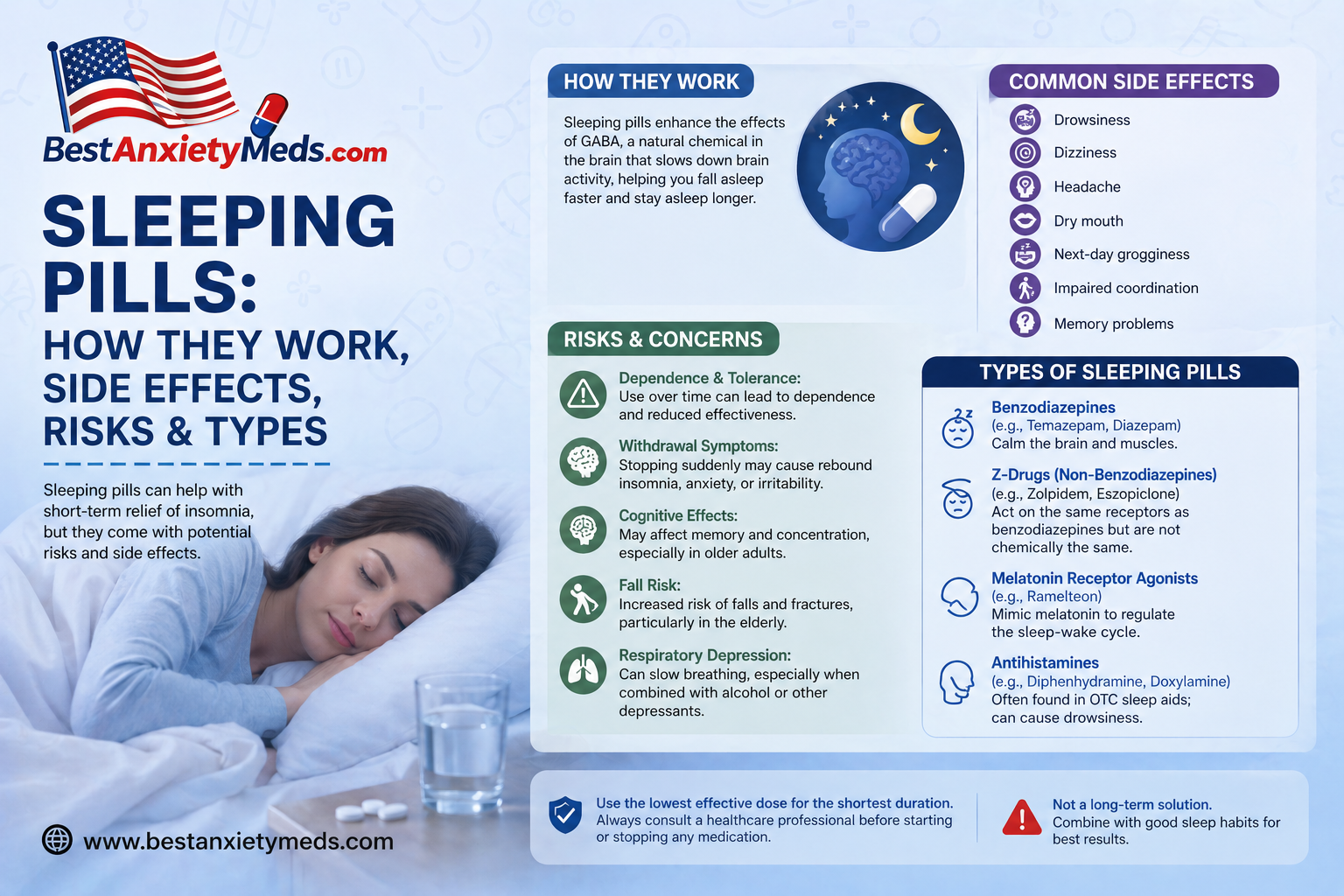
Many prescription sleeping pills, especially benzodiazepines and “Z-drugs,” enhance the activity of GABA (gamma-aminobutyric acid). GABA is a calming neurotransmitter that slows brain activity.
By increasing GABA effects, these drugs:
- Reduce anxiety
- Relax muscles
- Promote sleep
This is why they are often fast-acting and effective for short-term insomnia. However, they can also lead to dependence if used frequently.
2. Histamine Blocking (OTC Sleep Aids)
Over-the-counter sleeping pills often contain antihistamines, which block histamine—a chemical responsible for wakefulness.
By reducing histamine activity, these medications make you feel drowsy. While they are easy to access, they may cause next-day grogginess and are not ideal for long-term use.
3. Melatonin Regulation (Natural Sleep Hormone)
Melatonin supplements work differently. Instead of sedating the brain, they regulate your circadian rhythm, helping your body recognize when it’s time to sleep.
This makes melatonin especially useful for:
- Jet lag
- Shift work sleep disorder
- Irregular sleep schedules
4. Brain Activity Suppression
Some sleeping pills directly slow down brain activity, making it easier to transition into sleep. These medications are often stronger and require a prescription.
They can be effective but must be used cautiously due to the risk of over-sedation and breathing problems.
Types of Sleeping Pills
Sleeping pills can be divided into three main categories:
1. Prescription Sleeping Pills
These are the strongest sleep aids and are usually prescribed for moderate to severe insomnia.
Common Types:
- Benzodiazepines
- Z-drugs (non-benzodiazepine hypnotics)
- Sedating antidepressants
These medications work quickly and are effective, but they carry a higher risk of dependence and side effects. Doctors usually recommend them for short-term use only.
2. Over-the-Counter (OTC) Sleep Aids
OTC sleep aids are widely available and often contain antihistamines.
Key Features:
- No prescription required
- Mild sedative effect
- Easily accessible
However, they may cause:
- Daytime drowsiness
- Dry mouth
- Reduced alertness
3. Natural Sleep Aids
Natural remedies are popular for those seeking a safer alternative.
Examples:
- Melatonin
- Herbal supplements (like valerian root)
These options are generally considered safer but may not be as effective for severe insomnia.
Benefits of Sleeping Pills
Sleeping pills can provide several short-term benefits, especially for people struggling with acute sleep issues.
1. Faster Sleep Onset
One of the main advantages is the ability to fall asleep more quickly. Many users report falling asleep within minutes instead of hours.
This is particularly helpful for individuals dealing with stress, anxiety, or temporary sleep disturbances.
2. Improved Sleep Duration
Sleeping pills can help people stay asleep longer, reducing nighttime awakenings.
This leads to more continuous sleep, which is essential for physical recovery and mental clarity.
3. Short-Term Relief from Insomnia
For people experiencing short-term insomnia due to stress or life events, sleeping pills can provide temporary relief.
However, studies suggest they only improve sleep by a small margin—often just 8–20 minutes faster sleep onset.
Side Effects of Sleeping Pills
While sleeping pills can help, they also come with potential side effects.
Common Side Effects:
- Drowsiness during the day
- Dizziness
- Headaches
- Dry mouth
- Digestive issues
Many users experience a “hangover effect”, where they feel groggy or unfocused the next day.
Cognitive and Mental Effects
Sleeping pills can affect:
- Memory
- Concentration
- Decision-making
This can impact daily activities like driving or working, making them risky for regular use.
Unusual Sleep Behaviors
Some medications may cause:
- Sleepwalking
- Eating while asleep
- Talking or even driving
These behaviors can be dangerous because the person may not remember them.
Risks and Long-Term Effects
Sleeping pills are not without risks, especially when used regularly.
1. Dependence and Addiction
Frequent use can lead to physical and psychological dependence. Over time, the body may require higher doses to achieve the same effect.
2. Rebound Insomnia
When you stop taking sleeping pills, your insomnia may return worse than before. This is known as rebound insomnia.
3. Overdose Risk
Taking high doses or combining sleeping pills with alcohol can lead to life-threatening overdose.
4. Worsening Sleep Disorders
Some sleep aids can worsen conditions like sleep apnea, increasing health risks.
Are Sleeping Pills Safe?
Sleeping pills can be safe when used correctly and under medical supervision. However, they are not ideal for long-term use.
Important Safety Tips:
- Use the lowest effective dose
- Avoid mixing with alcohol
- Follow doctor instructions
- Do not use daily without guidance
Certain groups—such as older adults, pregnant women, and children—should be especially cautious.
Who Should Avoid Sleeping Pills?
Sleeping pills may not be suitable for everyone.
Avoid or Use with Caution:
- Elderly individuals (risk of falls)
- Pregnant or breastfeeding women
- People with breathing disorders
- Individuals with a history of substance abuse
Always consult a healthcare provider before starting any sleep medication.
Alternatives to Sleeping Pills
Experts often recommend non-drug approaches as the first-line treatment.
1. Cognitive Behavioral Therapy (CBT-I)
CBT for insomnia is one of the most effective treatments. It focuses on changing sleep habits and thought patterns.
2. Lifestyle Changes
- Maintain a consistent sleep schedule
- Avoid caffeine before bed
- Limit screen time
- Exercise regularly
3. Natural Methods
- Meditation
- Deep breathing
- Relaxation techniques
These methods improve sleep quality without the risks associated with medication
Conclusion
Sleeping pills can be helpful for short-term relief from insomnia, but they are not a long-term solution. While they work by calming the brain and promoting sleep, they also come with risks such as dependence, side effects, and reduced sleep quality over time.
The best approach to better sleep is a combination of healthy habits, behavioral therapy, and medical guidance when necessary. Instead of relying solely on medication, focusing on long-term sleep improvement strategies can lead to better overall health and well-being.
Frequently Asked Questions
Do sleeping pills really work?
Ans: Yes, but they usually provide modest improvements and are best for short-term use.
Are sleeping pills addictive?
Ans: Some types, especially prescription ones, can be addictive if used regularly.
Can I take sleeping pills every night?
Ans: Not recommended without medical supervision due to dependency risks.
What is the safest sleeping pill?
Ans: There is no universal safest option. Natural methods are generally safer long-term.
How long should I use sleeping pills?
Ans: Typically for short-term use only, unless advised by a doctor.
Disclaimer
This article is for informational purposes only and does not replace professional medical advice. Always consult a qualified healthcare provider before starting or stopping any medication. Misuse of sleeping pills can lead to serious health risks, including dependence, overdose, or death.