Anxiety disorders affect millions of people worldwide, and for many, medication becomes an important part of treatment when therapy and lifestyle changes alone are not enough. Two of the most commonly prescribed medications for anxiety are diazepam and alprazolam. Both belong to the benzodiazepine class, a group of drugs known for their fast-acting calming effects on the brain and nervous system.
However, even though they are in the same drug class, they are not identical. They differ in how quickly they work, how long their effects last, their risk of dependence, and how they are typically used in clinical practice. This guide explores every major aspect—uses, effectiveness, dosage, side effects, risks, and long-term considerations—to help you understand which option may be better depending on your situation.
What Are Diazepam and Alprazolam?
Diazepam and alprazolam are central nervous system (CNS) depressants. They work by enhancing the effects of GABA (gamma-aminobutyric acid), a neurotransmitter that reduces brain activity and produces a calming effect. This is why they are widely used for anxiety, panic disorders, and related conditions.
Diazepam is often known for its longer-lasting effects and broader uses, including muscle relaxation and seizure control. Alprazolam, on the other hand, is known for its fast onset of action, making it particularly useful for acute anxiety and panic attacks.
Although both medications can be effective, the choice between them depends on individual needs, medical history, and risk factors.
How Do These Medications Work for Anxiety?
Both diazepam and alprazolam act on the brain’s GABA receptors, which play a key role in controlling nervous system activity. By increasing GABA activity, these medications help slow down excessive brain signals, which reduces feelings of anxiety, panic, and stress.
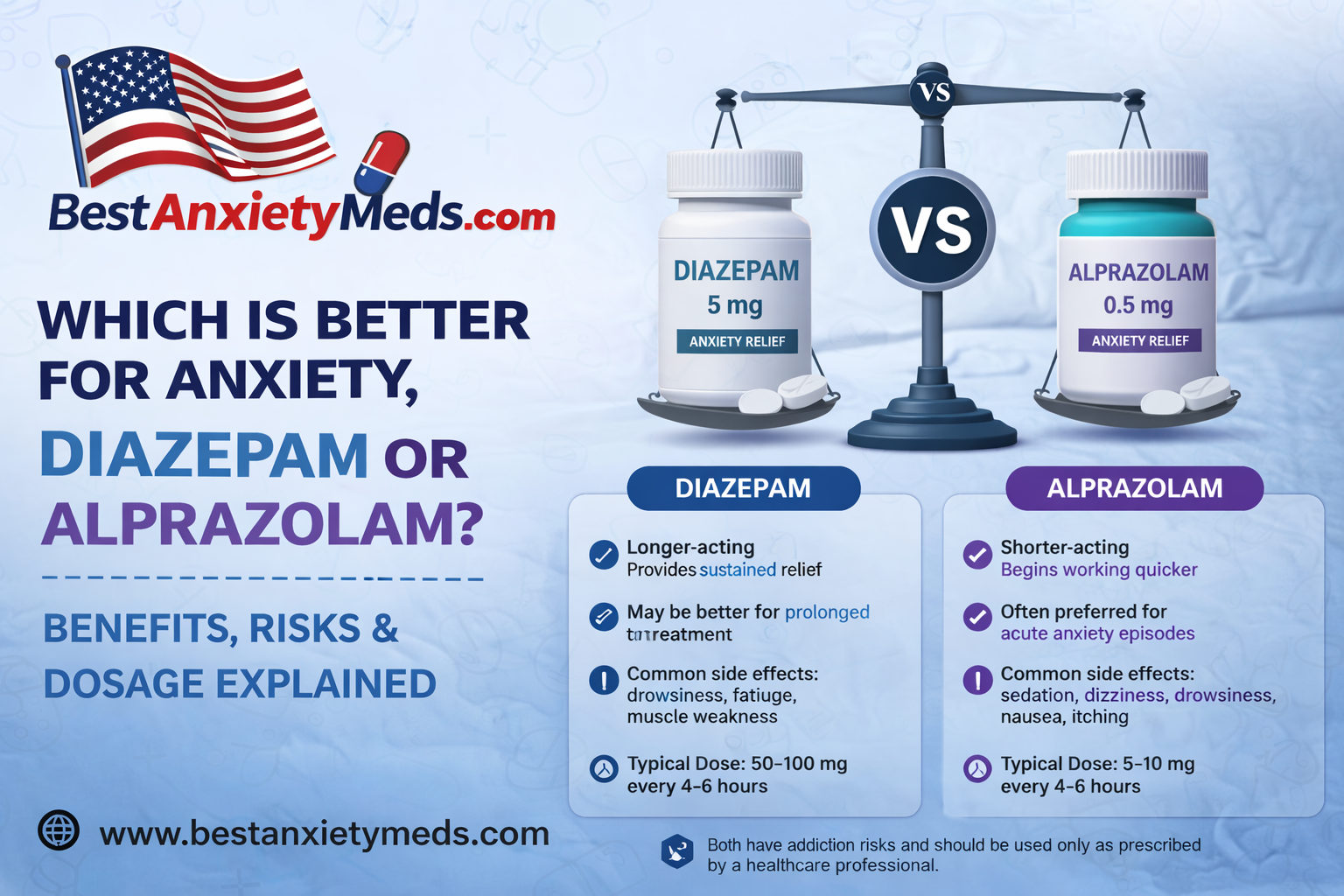
Alprazolam tends to act more quickly, often providing noticeable relief within a short period. This makes it helpful for people experiencing sudden panic attacks or intense anxiety episodes. However, its effects do not last as long, which may require more frequent dosing.
Diazepam works in a similar way but has a longer half-life, meaning it stays in the body for a longer time. This can provide more sustained relief but may also lead to lingering sedation. The difference in how long each drug stays active is one of the most important factors in choosing between them.
Effectiveness for Anxiety Treatment
When it comes to treating anxiety, both medications are highly effective. However, their effectiveness can vary depending on the type of anxiety disorder and how quickly relief is needed.
Alprazolam is often considered more effective for panic disorders and acute anxiety episodes because it works quickly and provides rapid symptom relief. People who experience sudden spikes in anxiety may benefit from this fast-acting property.
Diazepam, while also effective, is often preferred for generalized anxiety or situations requiring longer-lasting effects. It provides a more gradual and sustained calming effect, which can be useful for ongoing anxiety rather than sudden attacks.
Ultimately, effectiveness is not just about strength—it also depends on how well the medication matches the patient’s specific symptoms and needs.
Onset of Action and Duration
One of the biggest differences between diazepam and alprazolam is how fast they work and how long they last.
Alprazolam typically starts working within 20 to 60 minutes, making it ideal for immediate relief. However, its effects usually last 4 to 6 hours, which means multiple doses may be needed throughout the day.
Diazepam also begins working relatively quickly, but its effects can last much longer—sometimes up to 24 hours or more. This longer duration can reduce the need for frequent dosing but may also increase the risk of prolonged drowsiness.
This difference is crucial because it affects how the medication fits into a person’s daily routine and lifestyle.
Dosage and Administration
Both medications are available in different strengths and forms, including tablets and liquid solutions. The dosage is always determined by a healthcare provider based on the patient’s condition and response to treatment.
Alprazolam is usually prescribed in smaller, more frequent doses due to its shorter duration. Diazepam, because of its longer action, may be taken less frequently.
Doctors typically start with a low dose and gradually adjust it to find the minimum effective dose. This approach helps reduce side effects and lowers the risk of dependence.
Side Effects Comparison
Like all benzodiazepines, both medications can cause side effects. These are usually mild but can become more serious depending on dosage and duration of use.
Common Side Effects:
- Drowsiness
- Dizziness
- Fatigue
- Confusion
- Poor coordination
Alprazolam may cause more noticeable short-term sedation, especially shortly after taking a dose. Diazepam, due to its longer presence in the body, may lead to prolonged drowsiness or a “hangover” effect.
Side effects can vary from person to person, and some individuals may tolerate one medication better than the other.
Risks of Dependence and Addiction
Both diazepam and alprazolam carry a risk of dependence, especially when used for long periods. However, alprazolam is often considered to have a higher potential for misuse because of its fast-acting effects.
When a medication provides rapid relief, there is a greater chance that individuals may rely on it more frequently. This can lead to tolerance, where higher doses are needed to achieve the same effect.
Diazepam’s longer duration may reduce the need for frequent dosing, but it still carries a risk of dependence. For both medications, it is essential to follow medical guidance and avoid long-term unsupervised use.
Withdrawal Symptoms
Stopping benzodiazepines suddenly can lead to withdrawal symptoms, which can be uncomfortable and, in some cases, dangerous.
Common Withdrawal Symptoms:
- Anxiety rebound
- Insomnia
- Irritability
- Sweating
- Tremors
Alprazolam may cause more intense withdrawal symptoms due to its shorter half-life. Diazepam is sometimes used to help taper patients off benzodiazepines because its longer action allows for a smoother reduction.
Gradual tapering under medical supervision is the safest way to stop these medications.
Use in Long-Term Anxiety Management
While both medications are effective, they are generally not recommended for long-term daily use. This is because the risks of dependence, tolerance, and cognitive side effects increase over time.
For long-term management, doctors often recommend:
- Antidepressants (SSRIs or SNRIs)
- Cognitive behavioral therapy (CBT)
- Lifestyle changes such as exercise and stress management
Benzodiazepines are usually reserved for short-term or occasional use, especially during severe anxiety episodes.
Which Is Better for Anxiety?
There is no universal answer, as the “better” option depends on individual needs.
Alprazolam may be better if:
- You need fast relief from panic attacks
- Anxiety episodes are sudden and intense
Diazepam may be better if:
- You need long-lasting relief
- You prefer fewer doses throughout the day
The decision should always be made in consultation with a healthcare provider, who can evaluate your symptoms and medical history
Non-Medication Alternatives
Medication is only one part of anxiety treatment. Many people benefit from combining medication with non-drug approaches.
These include:
- Therapy (especially CBT)
- Meditation and mindfulness
- Regular exercise
- Healthy sleep habits
These methods can improve long-term outcomes and reduce reliance on medications.
Frequently Asked Questions
1. Which works faster, diazepam or alprazolam?
Alprazolam generally works faster and is preferred for sudden anxiety or panic attacks.
2. Which lasts longer?
Diazepam lasts longer in the body, providing extended relief.
3. Is alprazolam stronger than diazepam?
Alprazolam is often considered more potent in smaller doses.
4. Can I take them daily?
Only if prescribed by a doctor, and usually for short-term use.
5. Which is safer?
Both have risks, but diazepam may have a slightly lower risk of rapid dependence due to its longer action.
Conclusion
Diazepam and alprazolam are both effective medications for anxiety, but they serve different purposes. Alprazolam offers fast and powerful relief for acute anxiety and panic attacks, while diazepam provides longer-lasting, steady relief for ongoing symptoms.
Choosing between them depends on your specific needs, lifestyle, and medical history. Because both medications carry risks, they should always be used under medical supervision and for the shortest duration necessary.
Disclaimer
This article is for informational purposes only and does not constitute medical advice. Always consult a qualified healthcare professional before starting or stopping any medication. Misuse of benzodiazepines can lead to serious health risks, including dependence, withdrawal, overdose, or death.